USB vs XLR Microphone: Which One Wins?
You hear it fast in voice chat, streams, and meetings – a bad mic can make a strong setup feel cheap. If you’re stuck on usb vs xlr microphone options, the right pick comes down to how you use your desk, your budget, and how far you want your audio setup to grow.
USB vs XLR microphone: the real difference
At a glance, both types do the same job. They capture your voice. The difference is how they get that signal into your PC and how much gear they need to do it well.
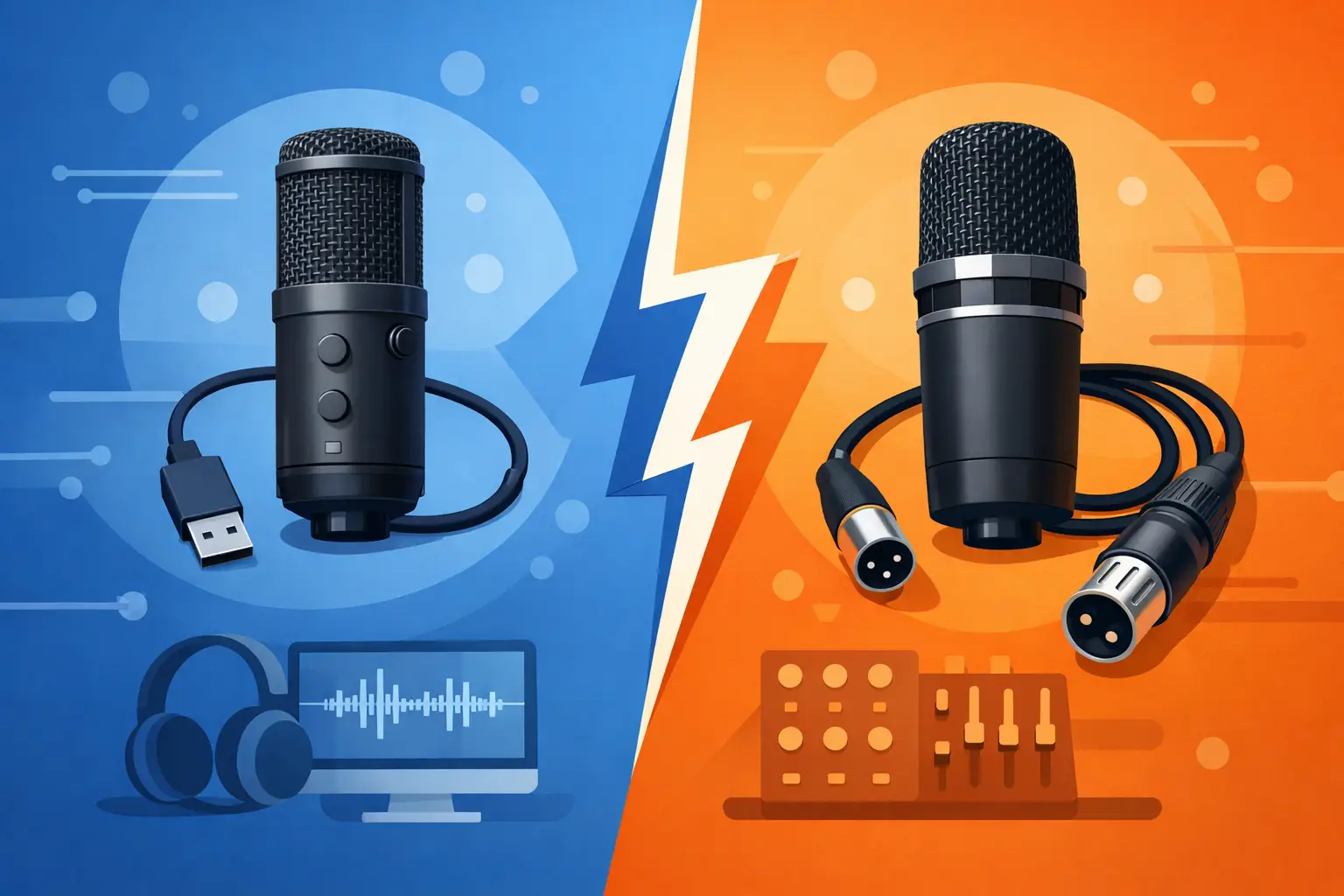
A USB microphone is the quick-start option. It plugs straight into your computer, usually works in minutes, and keeps the setup clean. The audio converter and preamp are built into the mic, so you do not need an audio interface or mixer just to get started. For gamers, students, remote workers, and first-time streamers, that simplicity is a huge win.
An XLR microphone uses a standard audio cable and needs extra hardware, usually an audio interface, mixer, or preamp, before your PC can use it. That sounds like a hassle, and sometimes it is. But it also gives you more control, better upgrade flexibility, and access to a wider range of microphones used by serious creators, podcasters, and musicians.
So this is not really about which one is universally better. It is about which one makes more sense for your setup right now.
Why USB microphones are so popular
USB mics sell well for a reason. They are practical. You buy one product, plug it in, adjust a few settings, and start playing, recording, or joining calls.
That ease matters more than people like to admit. If you are building a gaming setup, you already have enough to think about – keyboard feel, mouse sensor, headset comfort, monitor refresh rate, cable clutter, and desk space. A USB mic removes friction. It is the fast route to better audio without turning your room into a mini studio.
For Discord, Twitch, YouTube voiceovers, online classes, and work calls, many USB microphones sound more than good enough. Modern models often include useful built-in features like gain control, mute buttons, headphone monitoring, and polar pattern switching. Those extras make everyday use easier, especially if you are not interested in buying separate audio gear.
Price is another reason USB wins a lot of buyers. Your total cost is usually lower because the mic is the whole system. If your budget is tight, a solid USB mic can deliver a noticeable upgrade over a headset mic without forcing you into a bigger spend.
The trade-off is that you are buying into a more closed setup. If the built-in preamp or converter is average, you cannot swap just that part out later. What you buy is mostly what you live with.
Where XLR microphones pull ahead
XLR is the move when you want more than convenience. It gives you flexibility, cleaner signal handling in many setups, and a much wider path for upgrades.
With an XLR mic, the microphone and the audio interface are separate pieces. That means you can improve one part without replacing everything. Maybe you start with a budget dynamic mic and a basic interface. Later, you upgrade the interface for better preamps, cleaner gain, or more inputs. Or maybe you keep the interface and move to a stronger microphone. That modular path is one of the biggest reasons creators move to XLR.
XLR also makes more sense in setups with multiple audio sources. If you want to run a microphone, headphones, an instrument, or a second mic for co-hosting, an interface or mixer becomes useful fast. USB is usually built for one mic, one desk, one user. XLR is better when your setup starts getting serious.
There is also a sound quality argument, but it needs context. XLR does not magically mean better audio. A bad XLR mic through a weak interface can still sound mediocre. But at higher levels, XLR gear gives you access to microphones and audio chains that can outperform most USB options, especially in treated rooms or controlled recording environments.
Sound quality: better on paper vs better in real life
This is where buyers get misled. A lot of people hear that XLR sounds better and assume that means they need it. Not always.
If you are gaming in a bedroom with keyboard noise, PC fan noise, and no acoustic treatment, the mic type is only part of the story. Your room matters. Your mic placement matters. Your speaking distance matters. In a normal home setup, a well-chosen USB mic can absolutely sound better than a poorly used XLR mic.
That said, XLR gives you more room to optimize. You can pair a dynamic microphone with an interface that handles gain well, shape the signal more precisely, and build around your environment. This is especially useful if you stream often, record podcasts, or want that tighter, fuller vocal sound people associate with professional setups.
For many gamers and desk users, the biggest sound improvement does not come from choosing USB or XLR. It comes from choosing the right mic style. A dynamic mic often works better in untreated rooms because it picks up less background noise than many condenser mics. That can matter more than the connector.
Setup difficulty and desk space
USB is easier. No contest.
If you want to keep your desk clean and your cable management under control, USB is the obvious winner. One cable to the PC, maybe one headphone cable, and you are done. That makes it a strong fit for compact desks, dorm rooms, shared spaces, and buyers who just want gear that works.
XLR asks for more. You need the mic, an XLR cable, and an audio interface or mixer. That means more cost, more desk space, and more points where settings can go wrong. Gain staging, phantom power, interface drivers, and routing are not impossible to learn, but they are extra steps.
For some buyers, that extra complexity is worth it because it unlocks control. For others, it is just friction. If you know you hate troubleshooting, a USB mic can save you a lot of time.
Price and value
If you are shopping with a hard budget, USB usually offers stronger value upfront. You pay once and you are ready.
An entry-level XLR setup costs more because the microphone is only part of the purchase. You also need an interface, and in some cases a boom arm, pop filter, or shock mount. That total can rise fast. For buyers trying to upgrade audio without overspending, USB is often the smarter first buy.
But long term, XLR can offer better value if you plan to upgrade over time. Instead of replacing your whole setup, you can swap individual parts. That matters if you are building toward streaming, podcasting, content creation, or music work.
This is the real split. USB is better value for getting started. XLR is often better value for growing a serious setup.
Which one should gamers, streamers, and remote workers buy?
For most gamers, a USB mic is the best match. It is simple, affordable, and a major step up from the average headset mic. If your main goal is clearer comms, better stream presence, or cleaner in-game chat, USB gets you there faster.
For beginner streamers and creators, USB still makes a lot of sense. If you are testing the waters, there is no need to overbuild. A good USB microphone keeps your startup cost lower while still giving you content-ready audio.
For serious streamers, podcasters, and creators who already know they want to invest, XLR is hard to beat. It gives you more control, better expansion options, and a setup that can evolve instead of getting replaced.
For remote workers and students, USB is the easy recommendation. Fast setup, fewer compatibility issues, and less desk clutter usually matter more than the extra potential of XLR.
The best choice depends on where you are now
The usb vs xlr microphone debate gets louder than it needs to be because people shop for their future dream setup instead of their current reality. If you need a mic this week for gaming, meetings, classes, or casual streaming, USB is often the better buy. It is efficient, affordable, and good enough for a huge number of users.
If you already care about audio quality, expect to upgrade, or want a more pro-level setup with room to grow, XLR earns its higher cost. It is not the budget pick, but it is the platform pick.
At Elcomputer Store, this is exactly where smart shopping matters. The best mic is not the one with the most hype. It is the one that fits your desk, your budget, and the way you actually use your setup.
Buy for your real use case, not for bragging rights. Your voice will sound better, your desk will make more sense, and your money will go further.