Mechanical Keyboards for Sale: What to Buy
You can spot a bad keyboard purchase fast – mushy keys, missed inputs, loud rattling, weak lighting, or a layout that looked good in photos and feels wrong on your desk. When people search for mechanical keyboards for sale, they are usually not browsing for fun. They want a real upgrade, a better deal, and a keyboard that actually fits how they play, work, or study.
That is where shopping smart matters more than shopping expensive. A mechanical keyboard can absolutely improve comfort, speed, and setup style, but only if you buy the right one for your habits. The best pick for a competitive gamer is not always the best one for late-night studying, and a compact board that looks clean in a setup post may be frustrating if you rely on a numpad every day.
How to shop mechanical keyboards for sale without wasting money
The fastest way to narrow the field is to stop thinking of all mechanical keyboards as the same product. They are not. Switch type, keyboard size, connectivity, build quality, and extra features all change the experience in ways you feel immediately.
Start with use case. If your keyboard is mostly for gaming, your priorities are usually fast response, stable key feel, anti-ghosting, and software or lighting options that help personalize the setup. If you are buying for work, school, or mixed use, comfort and layout may matter more than flashy features. If you do both, you need balance, not just speed on the spec sheet.
Price also needs context. A low-priced board can be a strong buy if it gives you dependable switches, a solid frame, and the layout you need. A more expensive board is worth it only when the upgrade is clear – better stabilizers, wireless flexibility, hot-swappable switches, stronger materials, or better long-term durability. Paying more for branding alone is where value starts to slip.
Choose the right switch first
Switches decide most of the feel. That is the part buyers notice within minutes, and it affects gaming, typing, and comfort every single day.
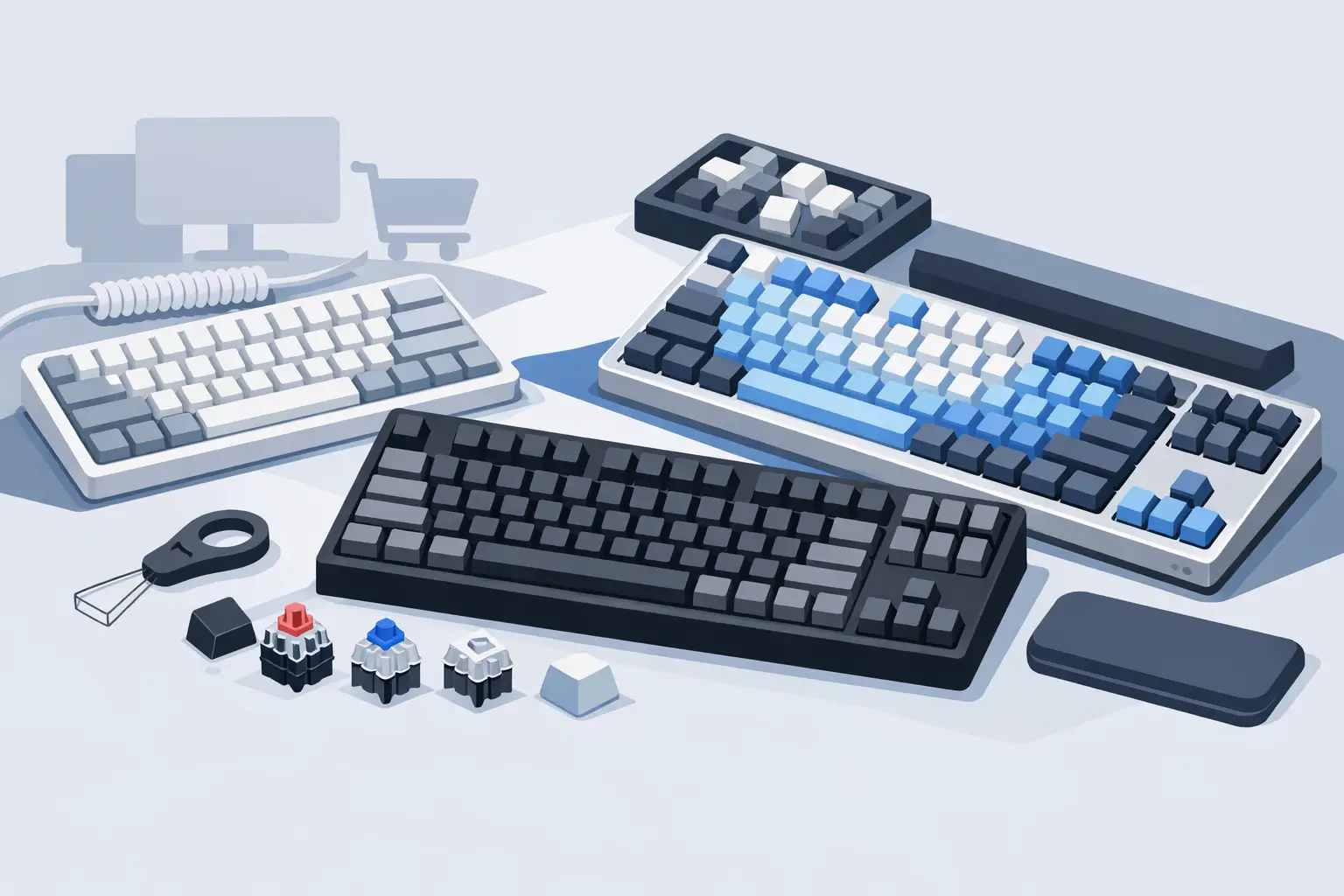
Linear switches feel smooth from top to bottom. Many gamers like them because they are quick and consistent, with no bump in the press. If your main goal is responsive gameplay, linear is often the easiest recommendation.
Tactile switches add a noticeable bump as you press the key. They feel more defined and can be a better fit for people who type a lot, write papers, answer emails, or want more feedback without going too loud.
Clicky switches add both tactile feedback and an audible click. Some users love that sharp mechanical sound. Others regret it the second they share a room, join a voice call, or start typing late at night. This is one of those it-depends decisions. Great for feel if you like noise, risky if you need a quieter setup.
Size matters more than most buyers expect
A full-size keyboard gives you everything – function row, arrows, navigation cluster, and numpad. It is practical for office work, spreadsheets, and general users who do not want to relearn key positions.
Tenkeyless, often called TKL, removes the numpad and keeps the rest. This is one of the strongest all-around choices because it saves desk space and still feels familiar. For gaming, it also gives your mouse arm more room.
Compact layouts like 75%, 65%, and 60% go further. They can look cleaner and travel better, and they fit smaller desks nicely. The trade-off is convenience. The smaller you go, the more likely you are to lose dedicated keys or depend on function layers. That can be fine for some users and annoying for others.
Features that actually add value
Not every extra feature deserves a higher price. Some are useful right away. Some are mostly visual. The right move is knowing which ones match your setup.
RGB lighting is a good example. For some buyers, it is part of the whole point. A keyboard is central to the look of a gaming desk, and customizable lighting helps tie the setup together. For others, simple backlighting is enough. If budget is tight, prioritize feel and build over advanced effects.
Hot-swappable switches are one of the most practical upgrades if you like customization. They let you replace switches without soldering, which means you can change feel later without replacing the whole board. That matters if you are still figuring out whether you prefer linear or tactile.
Wireless support can be worth paying for, especially if you want a cleaner desk or switch between devices. But wired still makes sense for buyers focused on lower cost, simple setup, and zero charging concerns. Wireless is convenient, not automatically better.
Build quality is where cheap boards often reveal themselves. Look for a sturdy frame, stable keycaps, and stabilizers that do not rattle badly on larger keys like spacebar, enter, and shift. A keyboard can have good switches and still feel disappointing if the overall construction is flimsy.
Mechanical keyboards for sale by buyer type
If you are shopping for pure gaming, start with a TKL or compact board with linear switches, solid anti-ghosting, and dependable build quality. You want quick key presses, enough room for mouse movement, and a keyboard that feels stable during long sessions.
If you are a student or office user, consider tactile switches and either full-size or TKL. Comfort, readability, and day-to-day practicality usually beat aggressive gamer styling. A quieter board may also save you from annoying roommates, classmates, or coworkers.
If you are building a setup on a budget, focus on trusted brands, straightforward features, and a layout you know you will use. Fancy extras are nice, but the better value is a keyboard that feels good now and still feels good six months from now.
If you want one keyboard for everything, TKL remains the safest middle ground. It works for gaming, typing, and most desk setups without asking for many compromises.
How to tell if a keyboard deal is really good
Sale pricing gets attention fast, and it should. But a discount only matters if the board itself makes sense for your needs.
A real deal combines the right feature set with a price that beats what you would normally expect in that category. If you are seeing mechanical keyboards for sale at aggressive pricing, check what is included. Are you getting durable switches, decent backlighting, known brand reliability, and a usable layout? Or are you looking at a keyboard that is cheap because corners were cut in the areas you will notice most?
Brand reputation matters here, but not in a blind loyalty way. Recognized gaming and peripheral brands often give buyers more confidence on consistency, software, support, and long-term value. That does not mean every premium model is automatically the best buy. It means comparing feature for feature instead of assuming the biggest name wins.
It also helps to think beyond the keyboard itself. If the store offers clear support, visible return options, and straightforward product navigation, the shopping process becomes easier and less risky. That matters when you are buying gear online and trying to compare models fast.
Common mistakes buyers make
One mistake is choosing based only on looks. A keyboard can have strong RGB, floating keycaps, and a sharp product photo, then disappoint on sound, comfort, or build. Appearance matters, especially in gaming setups, but feel matters more once the keyboard is on your desk every day.
Another mistake is buying too small. Compact boards are popular for good reasons, but they are not ideal for everyone. If you regularly use arrow keys, function keys, or a numpad, forcing yourself into a tiny layout can become frustrating fast.
Buyers also underestimate noise. Mechanical does not always mean extremely loud, but some switches and case designs are definitely louder than others. If you share space, stream, or work in calls, quieter options are usually the smarter buy.
Then there is overbuying. Not everyone needs premium materials, advanced software, wireless multi-device pairing, and hot-swap support in one keyboard. A simpler board at a lower price can be the better purchase if it covers what you actually use.
Where the best value usually shows up
Value is usually strongest in that middle zone – better than entry level, not overpriced for enthusiast extras. This is where many shoppers find the sweet spot: known brands, reliable mechanical switches, gaming-ready features, and sale pricing that feels like a real upgrade instead of a gamble.
That is also why a focused retailer can make the search easier. Stores like Elcomputer are built around gaming accessories and desktop gear, so the shopping experience is less about sorting through random electronics and more about comparing the products that belong in your setup.
The smart move is simple. Buy the keyboard that matches your desk, your habits, and your budget today, not the one that only looks impressive on a feature list. A good mechanical keyboard should feel like an instant upgrade, not a compromise you talk yourself into.