How Are Mechanical Keyboards Better?
A mushy keyboard can make a fast PC feel slow. If you’ve ever missed inputs in a game, fat-fingered a shortcut while working, or felt your hands get tired after long sessions, you’ve probably asked: how are mechanical keyboards better? The short answer is that they usually give you more precise key feel, stronger durability, and a more satisfying typing experience – but the full answer depends on how you use your setup.
How are mechanical keyboards better for everyday use?
The biggest difference starts under each key. Mechanical keyboards use individual switches instead of a rubber dome sheet, so every keypress feels more consistent and deliberate. That matters whether you’re gaming at night, writing papers, editing spreadsheets, or bouncing between work and Discord.
On a basic membrane board, keys can feel soft, uneven, and vague. You press down, but the feedback is less clear. Mechanical switches give you a defined actuation point, which means you can feel when the key has registered. For a lot of users, that alone makes the keyboard feel faster, even if the speed gain is really coming from better control.
Consistency is the real upgrade. You do not need to bottom out every keystroke, and your hands often notice the difference before your brain does. Once you get used to a switch that matches your style, going back to a cheap office keyboard can feel rough.
Better feel, better control, better accuracy
For gamers, the case for mechanical boards is easy to understand. Inputs need to be clean. In shooters, movement keys need to respond the same way every time. In MOBAs and MMOs, repeated presses and quick combos need to feel reliable. In rhythm and action games, timing matters, and vague key feel gets annoying fast.
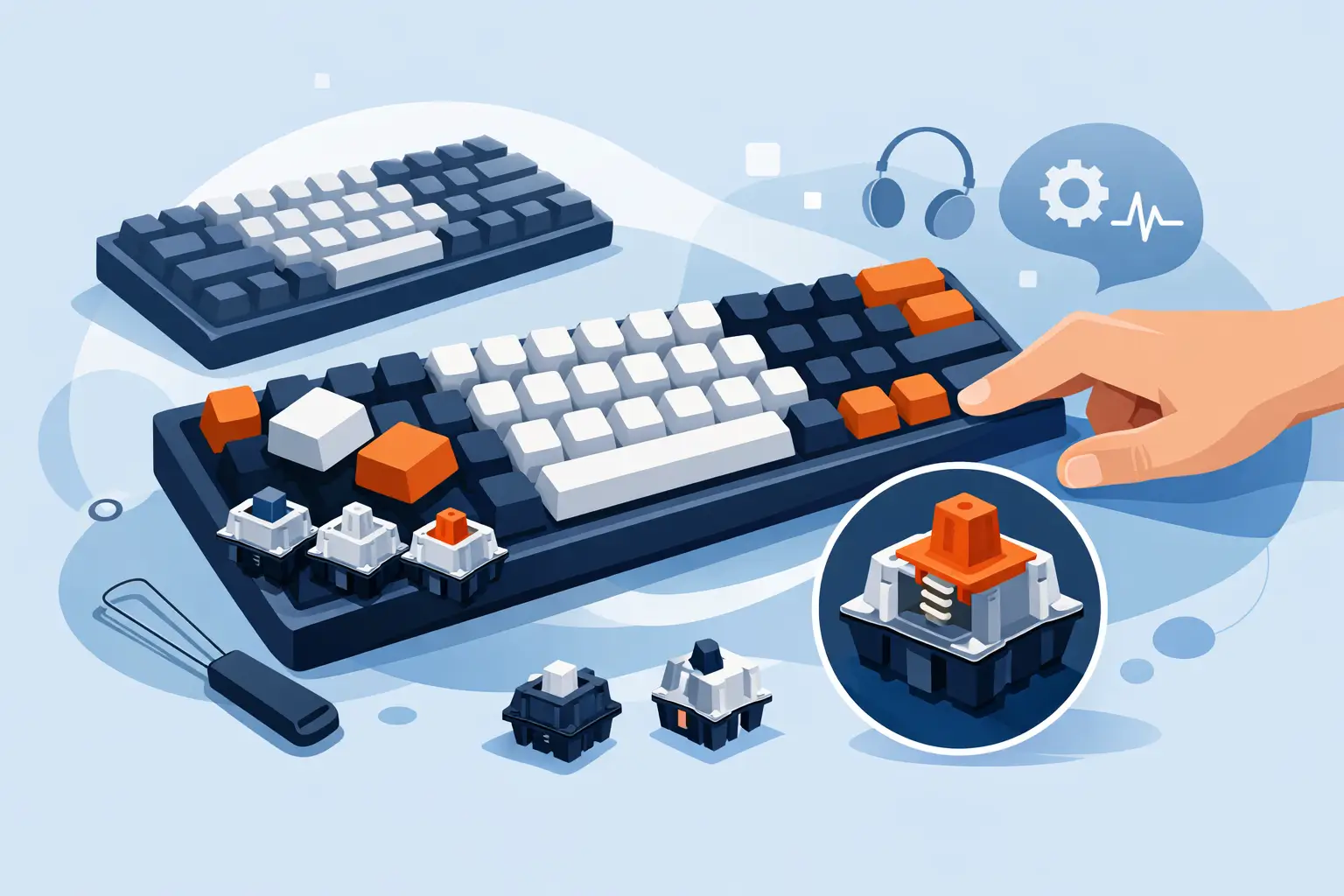
Mechanical keyboards help because the switches are more predictable. Linear switches usually feel smooth and light, which many players like for fast movement. Tactile switches add a bump that can help with control and typing feedback. Clicky switches give the most obvious response, though they are not always the best fit if you share a room or spend a lot of time on voice chat.
That does not mean every mechanical keyboard is automatically better for every game. A low-end mechanical board with weak stabilizers or poor build quality can still disappoint. But when the switch quality and build are decent, the keyboard feels more dependable during long sessions.
For typing, the gain is just as real. A lot of students, office users, and creators find that mechanical boards reduce accidental presses and make long writing sessions less frustrating. The feedback can improve rhythm, and rhythm matters more than people think when you type for hours.
Durability is one of the biggest wins
One of the strongest answers to how are mechanical keyboards better is lifespan. Mechanical switches are generally built for far more presses than standard membrane keyboards. If you use your keyboard daily for work and gaming, that extra durability is not just a spec-sheet flex. It can mean fewer issues over time and better value from the money you spend.
This matters even more if you are upgrading your setup on a budget. Buying one keyboard that lasts can be smarter than replacing a cheaper one every year or two. The initial price is often higher, yes, but many buyers stick with a good mechanical board for a long time.
Build quality often improves too. Mechanical models are more likely to include stronger frames, better keycaps, detachable cables, and features like hot-swappable switches or onboard controls. You are not just paying for the switch type. You are often stepping into a more serious product category overall.
The customization factor is real
Mechanical keyboards give users more control over feel and layout than membrane boards usually do. That is a big reason they stay popular with gamers and PC enthusiasts. You can choose switch type, keyboard size, backlighting, keycap style, and sometimes even swap switches later if your preferences change.
That flexibility matters because not everyone wants the same thing. Some people want a full-size board with a numpad for work and school. Others want a compact 60% or TKL layout to free up mouse space for gaming. Some want quiet switches for shared spaces. Others want a louder, more tactile feel because they like obvious feedback.
Even if you are not a full keyboard hobbyist, basic customization is still a benefit. A board that fits your desk, your hands, and your use case tends to get used longer. That makes the purchase easier to justify, especially when you catch a good deal on a recognized brand.
Sound and feel can improve the whole setup
This part is less about pure performance and more about day-to-day satisfaction. A keyboard is one of the few peripherals you physically interact with all the time. If it feels cheap, your setup feels cheap. If it feels solid, your whole desk experience improves.
Mechanical keyboards often sound and feel more premium, though the exact result depends on the switch, case, plate, and keycaps. Some users want that crisp click. Others want a quieter, deeper sound. Either way, the board feels more intentional than the flat, hollow response many membrane keyboards have.
That said, sound can also be a trade-off. Not every mechanical keyboard is office-friendly, dorm-friendly, or streamer-friendly. If you use an open mic, sit near classmates, or work around other people, switch choice matters a lot. A quieter linear or silent switch may be the smart move.
Are mechanical keyboards always better?
No, and that is where a lot of buying advice goes wrong. Mechanical keyboards are better for many users, but not every user.
If your top priority is spending as little as possible, a basic membrane keyboard can still get the job done. If you barely use your desktop, or you only need something simple for occasional browsing, the mechanical upgrade may not feel essential. There are also people who genuinely prefer softer key feel or want the quietest possible board without paying more.
Price is the obvious downside. Mechanical keyboards usually cost more, and the cheapest models are not always the best value. A weak budget mechanical board can sound bad, wobble under heavy typing, or use lower-quality switches that do not deliver the experience people expect. It is usually smarter to buy a solid entry-level board from a known brand than chase the absolute lowest price.
Noise is another factor. Clicky boards are fun for some users and a terrible fit for others. Size can matter too. Compact layouts save desk space, but they also remove keys some users rely on. The right buy depends on whether your setup is focused on gaming, school, creative work, or general use.
How are mechanical keyboards better when you compare value?
Value is where the conversation gets more practical. A mechanical keyboard often costs more upfront, but it can deliver better long-term return if you care about comfort, reliability, and repeat use. If you game daily, type constantly, or want a setup that feels like an actual upgrade, the extra cost usually makes sense.
That does not mean you need the most expensive board on the shelf. For most buyers, the sweet spot is a keyboard with proven switches, a layout that matches your desk space, and the features you will actually use. RGB looks great, but switch feel matters more. A metal top plate sounds impressive, but stable keys and decent build quality matter more. Wireless is convenient, but low-latency performance matters more if gaming is the priority.
That is why shopping by use case beats shopping by hype. If you want fast inputs and more mouse room, a TKL or 60% mechanical board can be a strong move. If you need all-purpose functionality for work and play, a full-size or 96% layout might be the smarter buy. If noise is a concern, quiet switches should move to the top of your list.
For shoppers comparing options, this is where a focused store selection helps. A retailer like Elcomputer Store makes more sense than a random general marketplace when you want gaming brands, better pricing, and gear that is actually built for performance instead of just looking the part.
Who should upgrade first?
If you spend hours every day at your keyboard, you are first in line. Gamers, students, remote workers, and creators usually notice the difference quickly because they are putting real time into the board. The more you type or play, the more the improved feel and consistency start to matter.
If your current keyboard misses inputs, feels uneven, or makes your setup feel like the weak link, a mechanical model is one of the easiest upgrades you can make. It changes how the whole PC feels to use. Not flashy. Just obvious.
The best keyboard is not the one with the loudest marketing. It is the one that makes your next game, assignment, or workday feel easier the second your fingers hit the keys.