
Mechanical Keyboards for Gaming That Fit
That missed input in a tight gunfight or the mushy feel during a long grind session usually comes down to one thing – your keyboard is holding you back. Mechanical keyboards for gaming are popular for a reason: they give you faster, more consistent keypresses, clearer feedback, and a better overall feel when every action matters.
But not every mechanical board is a smart buy. Some are built for competitive speed, some lean into comfort and typing balance, and some are mostly about RGB and looks. If you want a setup upgrade that actually feels worth the money, the right move is knowing what changes your in-game experience and what is just extra packaging.
Why mechanical keyboards for gaming stand out
A mechanical keyboard uses individual switches under each key instead of a softer membrane layer. That sounds technical, but the real difference is simple: keypresses feel more precise, more responsive, and more repeatable. For gaming, that matters in every genre.
In shooters, fast movement inputs and quick weapon swaps feel cleaner. In MOBAs and MMOs, repeated commands are easier to trigger with confidence. In racing and action games, the keyboard feels less vague and more deliberate. You are not fighting the hardware to confirm whether a key actually registered.
There is also a comfort angle that gets overlooked. A better switch feel can reduce finger fatigue over long sessions, especially if you play nightly or use the same setup for school, work, and gaming. That makes a mechanical keyboard more than a pure gaming purchase. It becomes an everyday upgrade.
The switch type changes everything
If you only compare price and RGB, you are skipping the part that matters most. The switch is the core of the experience.
Linear switches are smooth from top to bottom. They are a favorite for fast-paced gaming because there is no bump in the press. If you want quick movement keys and a light, fluid feel, this is usually the safest starting point.
Tactile switches add a noticeable bump during the press. That feedback helps some players feel exactly when the input actuates without needing to bottom out the key. If you split your time between gaming and typing, tactile can be the better middle ground.
Clicky switches add both a bump and a loud click. Some people love the sharp feedback. Others find the sound too much, especially in shared rooms, voice chat, or late-night sessions. They can feel satisfying, but they are not the easiest recommendation for every setup.
There is no universal best switch. If you play mostly competitive games and want speed, linear usually wins. If you want a keyboard that handles gaming and daily productivity equally well, tactile often gives better balance.
Size matters more than people think
A full-size keyboard gives you everything: number pad, function row, navigation cluster, and standard layout. It is practical if you work, study, or handle lots of spreadsheets. The trade-off is desk space. For gaming, a larger board can leave less room for wide mouse movement.
Tenkeyless, or TKL, removes the number pad. This is one of the best formats for gamers because it keeps essential keys while freeing up more room for the mouse. If you play FPS titles at low sensitivity, that extra space is not a small benefit.
Compact layouts like 65% and 60% go even smaller. They look clean and save the most space, but they often require function layers for certain keys. That can be perfect for players who want a tight, minimalist setup, but it is not always ideal if you rely on dedicated arrow keys or quick-access controls outside the game.
For most buyers, TKL is the safest sweet spot. It gives you a gaming-focused layout without asking you to relearn your keyboard.
Wired or wireless for a gaming setup?
Wired mechanical keyboards still make the most sense for many players. They are simple, reliable, and require no charging habits. You plug them in, they work, and they stay ready.
Wireless models have improved a lot. Low-latency wireless is now good enough for many gamers, especially if you care about a cleaner desk or use your keyboard across multiple devices. The question is less about whether wireless works and more about whether you want one more battery-powered device to manage.
If your priority is straightforward performance and value, wired is hard to beat. If you want flexibility, portability, and a cleaner look, wireless can absolutely be worth the extra cost.
Features that are actually worth paying for
Some features make a real difference. Others mostly inflate the price tag.
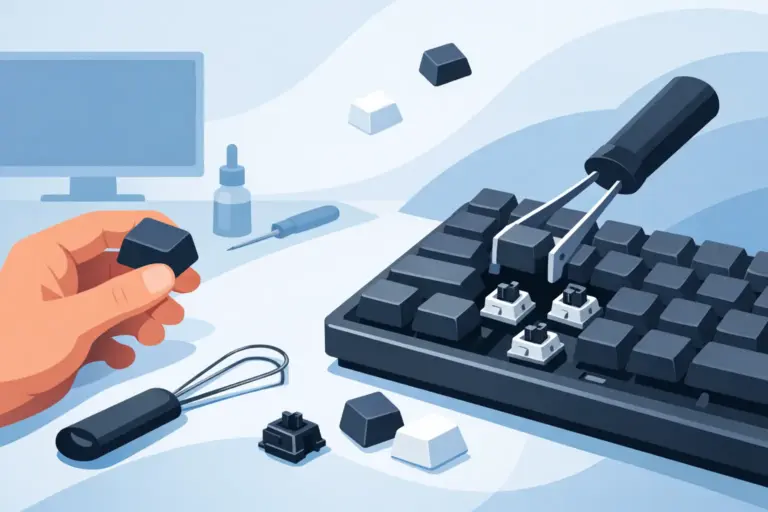
Hot-swappable sockets are one of the strongest value features available. They let you change switches without soldering, which means your keyboard can evolve with your preferences. If you are not sure what switch type you will love long term, this adds a lot of flexibility.
N-key rollover and anti-ghosting are also worth having, especially for gaming. These features help ensure multiple simultaneous keypresses register properly. On a gaming board, they should be expected, not treated like luxury upgrades.
Backlighting and RGB matter more than some people admit. Not because lights improve performance, but because visibility and setup matching are part of the experience. If you care about aesthetics, there is nothing wrong with that. Just do not let lighting distract you from switch quality and build.
Dedicated media controls, detachable cables, onboard memory, and software support can all be useful depending on your routine. But they are secondary. If the typing feel and layout are wrong, those extras will not save the purchase.
Build quality is where value shows up
Two keyboards can look nearly identical in photos and feel completely different on a desk. That is why build quality matters.
A solid frame reduces flex and gives the board a more stable feel during intense sessions. Better keycaps resist shine and wear longer. More refined stabilizers make larger keys like spacebar, enter, and shift feel less rattly. These details affect the daily experience far more than flashy packaging.
This is also where price-conscious shoppers need to be sharp. Cheap does not always mean bad, and expensive does not always mean better value. Plenty of affordable gaming keyboards now deliver strong switches, good lighting, and respectable construction. The key is focusing on what you are paying for, not just the badge on the box.
That is especially true when shopping sales, promotions, and category deals. A mid-range keyboard at a discount often beats an entry-level model at full price.
Mechanical keyboards for gaming by player type
If you mainly play competitive shooters, prioritize a TKL or compact layout, linear switches, and a stable wired connection. You want speed, space, and consistency.
If you play a mix of RPGs, MMOs, and everyday PC tasks, consider tactile switches and either full-size or TKL depending on how often you use the number pad. You are looking for comfort over long sessions and better all-around usability.
If your setup is part gaming station, part dorm desk, part work area, wireless connectivity and a compact footprint may matter more. In that case, convenience is part of performance because it helps the whole space work better.
And if you are buying on a budget, do not chase every premium feature at once. Start with a reliable switch type, a layout that fits your desk, and solid construction. You can always upgrade later.
What to avoid before you buy
The biggest mistake is buying based on appearance alone. A keyboard can look incredible online and still feel disappointing after a week of actual use.
Another common mistake is choosing the wrong size for your setup. A full-size board can feel crowded in a small gaming space. A compact board can feel frustrating if you constantly need missing keys. Think about your real use, not just the trendiest format.
You should also be careful with ultra-cheap boards that promise every premium feature at once. If the price seems too low for the spec sheet, something usually gives – switch consistency, stabilizer quality, software reliability, or long-term durability.
Smart buyers compare the feel-first factors: switch type, layout, build, and everyday comfort. Everything else comes after that.
The right upgrade is the one you will notice every day
Mechanical keyboards for gaming are not just for esports players or high-end setups. They are one of the most noticeable upgrades you can make because you feel the difference immediately – in movement, in response, and in how your setup comes together.
The best board is not the one with the loudest marketing. It is the one that matches your games, your desk, your budget, and your habits. If you shop that way, you get more than a better keyboard. You get a setup that feels faster, cleaner, and more enjoyable every time you sit down to play.
If you are ready to upgrade, keep it simple: buy for feel, buy for fit, and buy the features you will actually use. That is how you get better value and a gaming setup that stays satisfying long after the sale price is gone.